
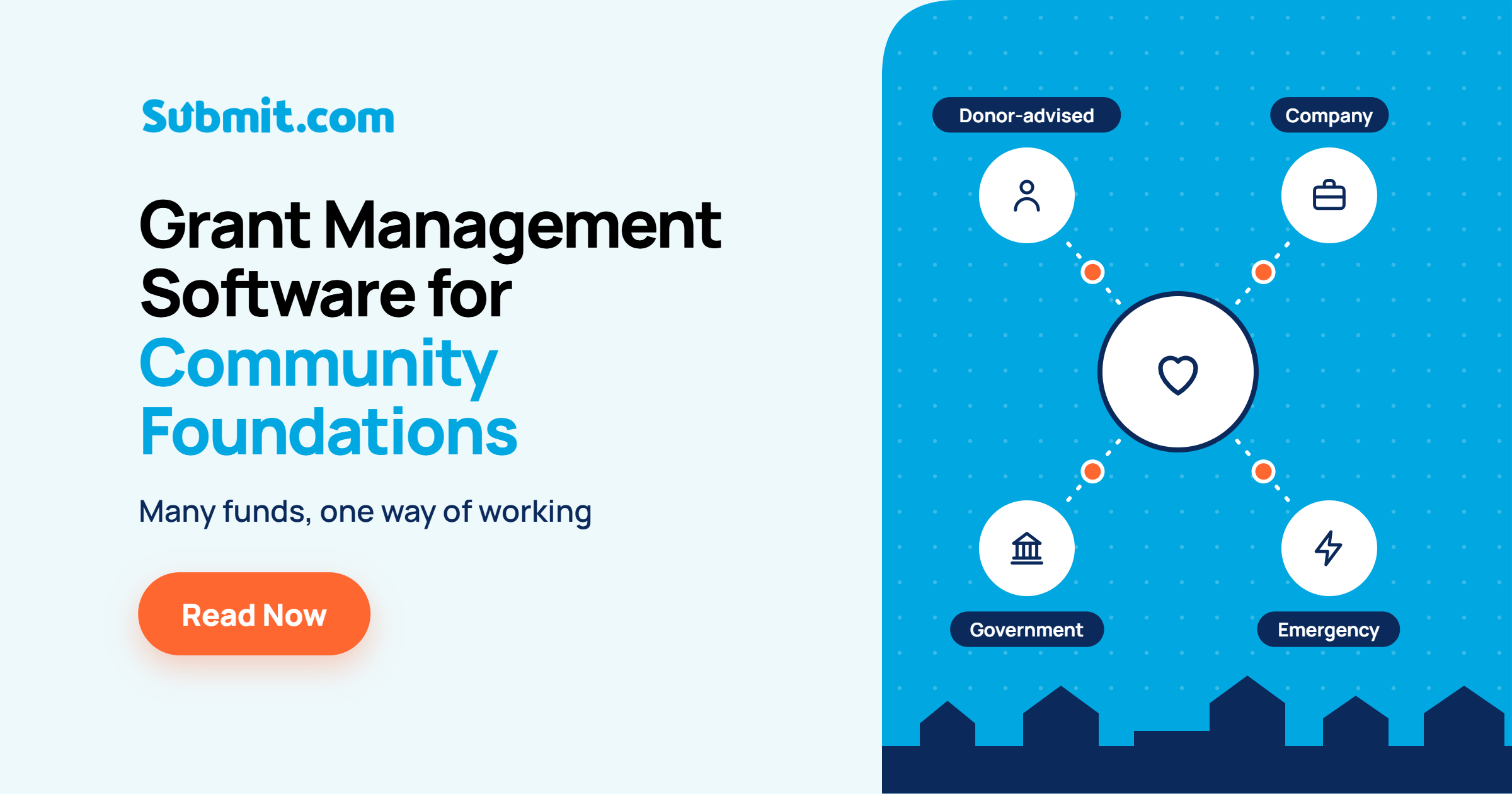
Grant Management Software for Community Foundations
Grant management software gives a community foundation one place to run every fund it administers, from application and assessment to award, payments and post-award reporting. A good system lets each fund keep its own criteria, panel and reporting while the foundation keeps one consistent record of every decision. It works alongside your donor CRM and finance system rather than replacing them.
A community foundation rarely runs one grant programme. It runs a portfolio: an endowed fund for open rounds, a family’s donor-advised fund with its own interests, a company’s community fund, a scheme it administers for a government department, and an emergency appeal that arrives with a week’s notice.
The scale is considerable. Community Foundation Ireland made 1,119 grants worth €23.5 million in 2024, and set up 16 new funds that year, including six for companies, five for families or individuals and two established by Government (Community Foundation Ireland, Annual Report 2024). Across the UK, accredited community foundations distributed more than £183 million through over 38,000 grants in 2024-25 (UK Community Foundations).
Each new fund brings its own donor, criteria and reporting expectations, and rarely any extra staff. This guide covers what grant management software should do for a community foundation, where its job ends, and how to set it up so a small team can run many funds without running many separate processes.
What grant management software covers, and what it leaves to other systems
“Community foundation software” can mean three different things. Grant management software, sometimes called grantmaking software, handles grant administration: publishing a round, collecting applications, screening eligibility, routing applications to reviewers, recording scores and decisions, managing awards and payments, and collecting progress and final reports.
Community foundations also raise money, look after donors and invest endowments. Those jobs usually sit in a donor CRM and a fund accounting or finance system. Submit.com focuses on the grant lifecycle and connects to those systems rather than replacing them. Its REST API can push applicant records, decisions and outcomes into a CRM, and export submissions, scores and outcomes for finance and board reporting. Teams that don’t need a live connection can download reports as Excel, CSV or PDF files.
Settle that boundary before you choose a system. If a demonstration blends donor management and grant management together, ask two questions: which system holds the record of a fund’s restrictions, and which holds the record of each grant decision?
Grant management software runs the grant lifecycle; donor records and fund accounting usually stay in their own systems, connected by an API or exports.
Running many funds without running many processes
The aim is one common framework with settings for each fund. In Submit.com, each fund or round gets its own form, eligibility rules, review stages, scoring criteria and email templates, built with a no-code form builder and reusable templates. The building blocks stay the same across funds, so applicants, reviewers and staff learn one way of working.
Three features do most of the work when funds multiply:
- Eligibility screening: a disqualifying answer, such as an address outside the fund’s area, can decline the application automatically and send the applicant a clear notice, so reviewers only see eligible applications.
- Auto-tagging: answers can tag an application by fund, theme, area or applicant type. The High Fives Foundation uses tags to see at a glance whether an applicant is new or returning, and which of its nine funding areas they are applying under.
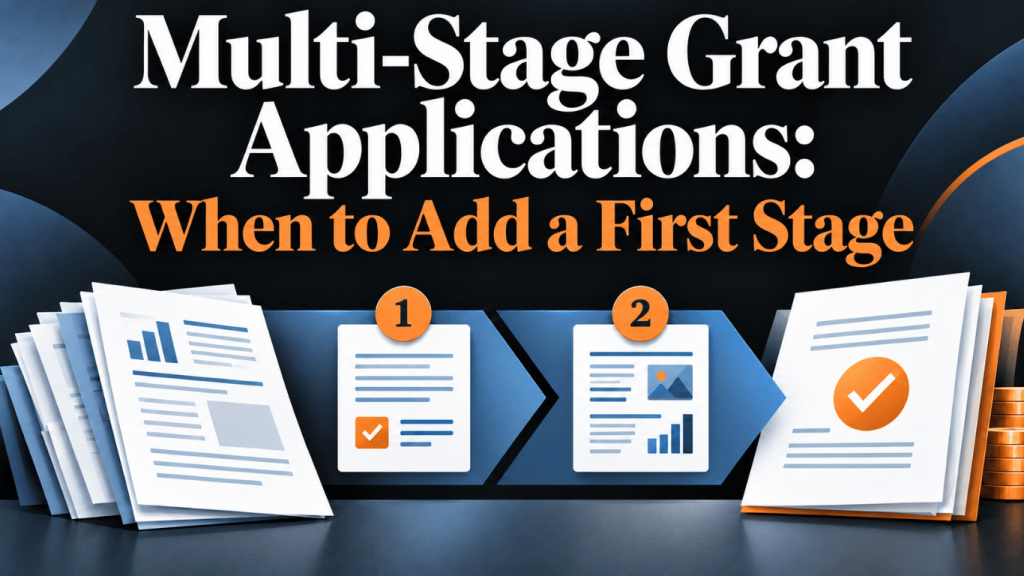
- Multiphase forms: a fund can run an expression of interest, a full application and later progress reports as phases of one record, rather than as separate forms.
How you combine them depends on the fund. The table below shows typical patterns; your fund agreements decide the detail.
| Type of fund | What usually differs | Set-up to consider |
|---|---|---|
| Endowed or unrestricted fund with open rounds | The foundation sets the criteria; many small applications | A short single-stage form, automatic decline on core eligibility, weighted scoring and a panel working from a shared folder |
| Donor-advised fund | The donor advises; the foundation’s committee decides | Record the donor’s advice in an internal Office Use form or private comment, kept separate from the committee’s decision, and tag the fund so its report filters cleanly |
| Company or corporate partner fund | Partner themes, messaging and reporting dates | Partner-specific questions and email templates, tags for the partner’s themes, and an export filtered by those tags for each update |
| Government-established fund | Conditions set by a department; closer monitoring and audit | Phased progress reports, tracking of awarded amounts and drawdowns, and audit log exports |
| Emergency or rapid-response fund | Speed, simple criteria and a short window | A form copied from a template, automatic decline on eligibility, one review stage and bulk decision emails |
On a small screen, scroll the table sideways to see every column.
The government-established row is where community foundation work comes closest to government grant management. If you administer public money, expect the department’s monitoring and audit conditions to shape the fund more than your own preferences. Our page on grant management for government and local authorities covers that side in more depth.
Keeping decisions with trustees and conflicts on the record
Software can’t make a decision sound, but it can make the record of that decision complete. That record is what a regulator, auditor or donor will ask to see, and the rules behind it depend on where your foundation is registered.
- Ireland: the Charities Regulator’s Charities Governance Code sets six principles, including behaving with integrity. Registered charities apply its standards on a comply-or-explain basis and keep a Compliance Record Form showing how they meet them (Charities Regulator, Charities Governance Code).
- England and Wales: the Charity Commission’s guidance on trustee decision-making (CC27), updated on 9th September 2024, sets seven decision-making principles, including identifying and managing conflicts of interest. It also says trustees may be asked for evidence that they followed them (Charity Commission, CC27).
- Scotland and Northern Ireland: each has its own charity regulator and guidance (Charity Commission, The essential trustee). In Scotland, the regulator’s guidance on conflicts of interest covers registers of interests and when a conflicted trustee should withdraw from a decision (Scottish Charity Regulator).
For donor-advised funds, keep the donor’s advice and the committee’s decision as separate entries. Your governing documents and fund agreement say who decides; the record should show it happened that way.
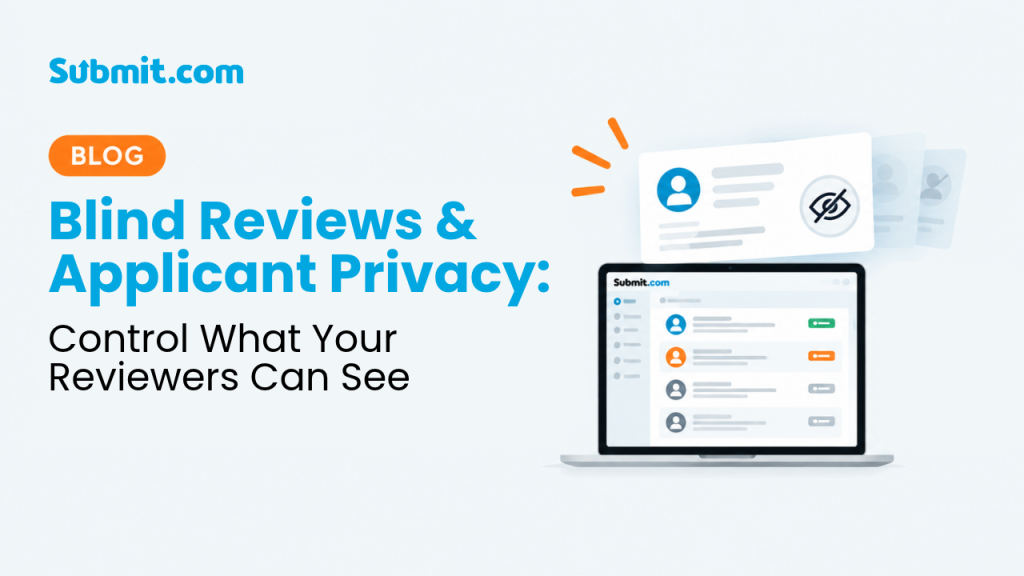
In Submit.com, reviewer access is set folder by folder, so a panel member who declares an interest in an application can be left out of the folder that holds it. Scores are recorded against each reviewer, comments are time-stamped, and decisions to advance, waitlist or decline an application are logged. Audit logs track activity across submissions, reviews, decisions and admin actions. Where reviewers are likely to know the local groups applying, optional anonymised review hides identifying details.
Making panel review easier for volunteers
Community foundation panels often include trustees, volunteers and local experts who review a few times a year. The less they need to relearn each round, the more consistent their scoring.
External reviewers in Submit.com get their own login with access only to the folders assigned to them. Weighted score bars give every reviewer the same criteria, with notes against each score, and applications can be compared side by side on any device. For committee meetings, internal Office Use forms produce summary reports of the applications under discussion.
Developing Healthy Communities, which runs community wellbeing grants across Northern Ireland funded by the Public Health Agency, moved its reviewers from emailed packs to direct portal logins. Making supporting documents mandatory meant no incomplete application reached assessment.
Post-award reporting that stays proportionate
Post-award reporting is where funders most often ask for more than they use. The Institute for Voluntary Action Research’s Open and Trusting Grant-making initiative encourages funders to make grant reporting more proportionate, simple and useful.
A practical rule is to ask only for what someone will read, and scale the report to the grant. A short end-of-grant form may be enough for a small community grant, while a multi-year award might justify staged progress reports. This is a recommendation, not a regulatory requirement; your fund agreements set the minimum.
In Submit.com, progress and final reports can be added as later phases of the original application, so a grantee’s update sits on the same record as their application and assessment. Grant tracking records the amount awarded and each drawdown against the fund’s budget. Bulk messages can go to everyone whose report is still outstanding, filtered by tag or status.
Reporting to donors, partners and your board from one set of data
Community foundations report in several directions at once: to individual donors about their fund, to company and public partners against their conditions, and to trustees across the whole portfolio. Building each report from scratch is slow and invites inconsistencies.
If tags and location questions are set up consistently from the first round, each report becomes a filter rather than a project. Submit.com reports can be filtered by folder, status, date range and tag, and location questions generate graphs and maps for each form. Developing Healthy Communities filters funded projects by health and social care trust area and cross-references them with deprivation levels, so ministerial visits and Assembly questions are answered with routine queries rather than a spreadsheet scramble.
Language matters for place-based funders too. Applicants can switch between language versions of a form without losing their answers. Kildare County Council publishes Irish-language application forms this way, and Welsh is also among the supported languages.
Moving from spreadsheets or a legacy system
Most organisations can launch a first programme in Submit.com within days, depending on how complex the workflow is. Replacing an established system takes longer. Developing Healthy Communities went from decision to live in eight weeks, with its programme manager configuring the forms herself without a coding background. The team spent two of those weeks testing the full process internally before applicants saw it.
Submit.com is a cloud-based platform with encryption in transit and at rest, role-based permissions, configurable data retention and GDPR-ready data processing. It holds SOC 2 Type 1 and Type 2 and Cyber Essentials certification. The detail is on the security and compliance page.
Start with one fund. Choose a round that is due soon and typical of your portfolio, build it, and test it end to end with staff acting as applicants and reviewers. Then copy what works to the next fund.
Questions to ask any supplier
- Can each fund have its own form, eligibility rules, panel and reporting without a separate system?
- How is a reviewer kept away from an application they have declared an interest in?
- Where is a donor’s advice recorded, and where is the committee’s decision?
- Can grantees report in stages on the same record, and can you track drawdowns against each fund?
- How do you produce a report for one donor’s fund without exporting everything?
- What connects live to your CRM and finance system, and what relies on exports?
- Where is data hosted, which certifications are current, and how is retention set?
- Can applicants apply in Irish or Welsh if your community needs it?
For the wider picture, see our overview of grant management software, our page on grantmaking software for foundations, and our guide to grant management for non-profits and charities. If your foundation also runs local awards, read how grants and awards can share one platform.
See how your funds, panels and grantee reports could run in Submit.com


0 Comments