

Seven problems cost grant funders the most time, money and trust: unclear rules, weak data security, burdensome applications, unclear eligibility, inconsistent review, weak monitoring and no feedback for applicants. Most share one root cause: decisions and evidence spread across email, spreadsheets and people’s memories. Each has a warning sign you can spot and a fix you can make before the next round opens.
This guide is for organisations that award grants: councils, public bodies, foundations, charities and universities in Ireland and the UK. Use the quick check below to see which problems apply to you, then read the detail on each. It is written by Submit.com, which makes grant management software.
Quick check: the seven problems at a glance
| Problem | Warning sign | Fix |
|---|---|---|
| 1. Unclear rules and authority | Nobody can say who approved an award, or on what basis | Written criteria, named decision-makers, separated duties |
| 2. Weak data security | Applications and bank details sit in shared inboxes and drives | Role-based access and a supplier with security evidence |
| 3. Burdensome applications | Long forms for small grants; questions you never use | Ask only what you will assess, scaled to the grant |
| 4. Unclear eligibility | Many ineligible applications to screen out | Published criteria and an eligibility check up front |
| 5. Inconsistent review | Scores in different formats; conflicts handled informally | Shared weighted criteria, comments and recorded declarations |
| 6. Weak monitoring | Reports chased by email; payments not tied to progress | Proportionate reporting and payments against evidence |
| 7. Money with no feedback | Unsuccessful applicants hear nothing useful | Brief feedback and support beyond the cheque |
On a small screen, scroll the table sideways to see every column.
1. Unclear rules and decision authority
When criteria are agreed informally, nobody is named as the decision-maker and the same person can assess, approve and pay a grant, the programme is exposed to mistakes, accusations of favouritism and, at worst, fraud. It is also hard to defend when an auditor, elected member or unsuccessful applicant asks how a decision was made.
Fix: write down the criteria, weightings and decision route before the call opens, name who can approve awards, and separate assessing, approving and paying. For charities in England and Wales, the Charity Commission’s guidance on internal financial controls (CC8) covers controls over grant-making and segregation of duties (Charity Commission, CC8). Irish grants from Exchequer funds fall under Circular 13/2014, which sets responsibilities for both those giving and receiving grants (gov.ie, Circular 13/2014).
2. Weak data security
Grant applications hold personal data, financial statements and sometimes bank details. Keeping them in shared inboxes, personal drives or forwarded attachments makes it hard to control who sees what, and hard to delete data when it should go. Funders in Ireland and the UK are responsible for handling applicants’ personal data under the GDPR and the UK GDPR.
Fix: keep applications in one system with role-based access, so staff and reviewers see only what they need, and set retention periods. If you use a supplier, ask for their SOC 2 report and Cyber Essentials certificate, confirm where data is hosted, and agree a data processing agreement.
3. Making the application process harder than it needs to be
Every unnecessary question costs applicants time, and that cost falls hardest on small organisations. Research by Giving Evidence for the Law Family Commission on Civil Society estimated that UK charities spend at least £900 million a year applying to charitable foundations, and one interviewee described a 60-page application form for a £500 grant (Giving Evidence, June 2022).
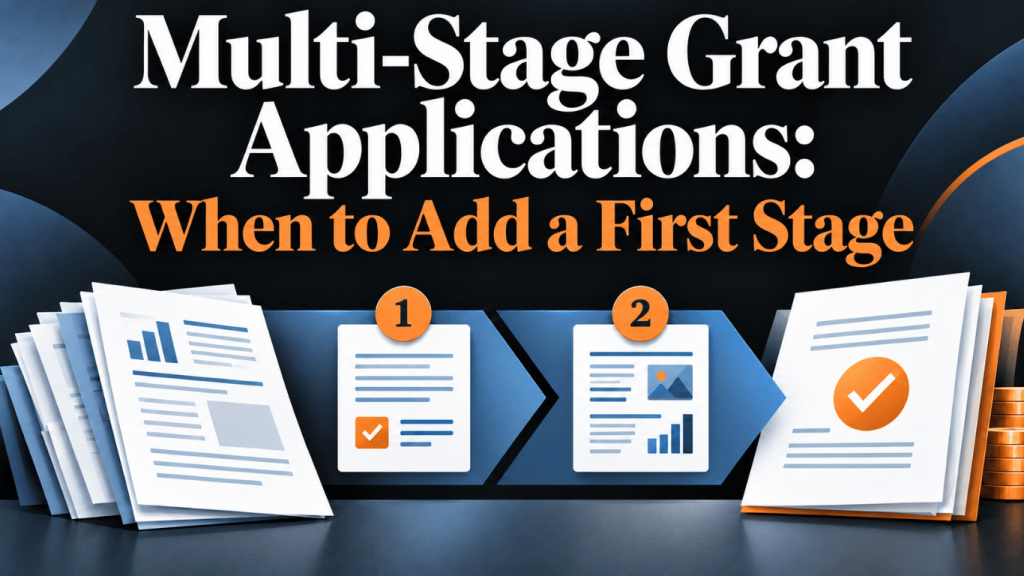
Fix: ask only what you will use to assess or report, scale the form to the size of the grant, show applicants every question before they start, and let them save and return. For larger grants, a short first stage can save everyone time; see when to add a first stage.
4. Unclear eligibility and guidance
If the call for applications is vague, you receive applications you can never fund, and applicants waste work on them. The same Giving Evidence report cites Directory of Social Change research finding that funders with eligibility checkers received fewer ineligible applications: 10%, against 21% across all funders.
Fix: publish who can apply, what you will and will not fund, and the assessment criteria. Put an eligibility check at the start of the form, so applicants who cannot qualify find out in minutes, and use conditional questions so each applicant only sees what applies to them.
5. Inconsistent, manual review
When reviewers score in their own formats, add up totals by hand and handle conflicts of interest informally, decisions become hard to compare and harder to explain. Reviewers who know applicants personally can also, without meaning to, favour organisations they recognise.
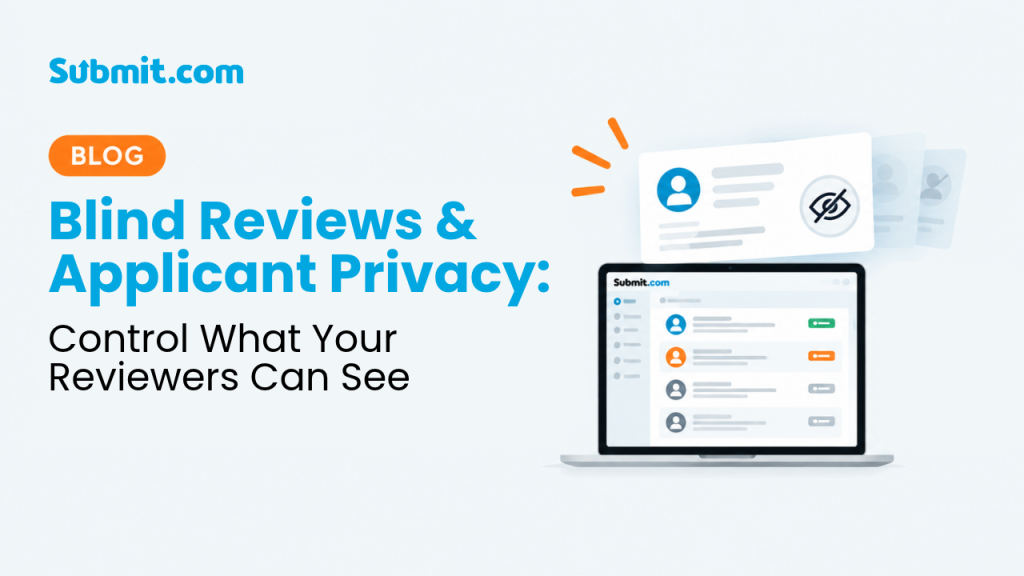
Fix: give every reviewer the same weighted criteria, ask for a comment against each score, record conflict-of-interest declarations and keep conflicted reviewers away from the applications concerned. Where reviewers are likely to know applicants, consider blind review. Our guide to audit-ready grant review covers the full record to keep.
6. Weak monitoring after the award
Paying a grant and hearing nothing until the final report leaves problems undiscovered until it is too late to fix them. Asking for too much is a problem too: the Institute for Voluntary Action Research’s Open and Trusting Grant-making initiative encourages funders to make reporting more proportionate, simple and useful.
Fix: scale reporting to the size and risk of the grant, schedule reports at the start, tie larger payments to progress or evidence of spending, and follow up overdue reports on a set timetable. Our grant management guide sets out what to track at each stage.
7. Handing over money with no feedback or support
A grant is more than a payment. Successful applicants often benefit from a funder’s contacts, advice and profile, and unsuccessful applicants benefit from knowing why they were not funded, so their next application is stronger.
Fix: decide at the design stage what non-financial support you will offer, such as introductions, peer networks or publicity, and give unsuccessful applicants brief feedback against the published criteria. Feedback is much easier when reviewers’ comments are already recorded against each score.
How funders in Ireland and the UK have fixed these problems
- Developing Healthy Communities in Northern Ireland made supporting documents mandatory and moved reviewers from emailed packs to direct logins, so no incomplete application reached assessment.
- Dún Laoghaire-Rathdown County Council standardised grant workflows across eight departments, with 22 admin users each restricted to their own role.
- Cork City Council gave 23 external awards judges access only to their assigned category, with scores against five criteria totalled automatically.
- Chambers Ireland stopped printing every application five times and posting bundles to judges, who now score online.
- Kildare County Council publishes forms in Irish and English, so applicants can switch language mid-form without losing their answers.
“We’ve got a slick, efficient grant process now. Happier team, way less paperwork.”
Beverley Davies, Grants and Programmes Manager, Suffolk County Council
Frequently asked questions
What are the most common grant management problems?
The most common are unclear rules and decision authority, weak data security, applications that are harder than they need to be, unclear eligibility guidance, inconsistent review, weak monitoring after the award, and giving applicants no feedback or support. Most stem from decisions and evidence being spread across email, spreadsheets and people’s memories.
How can funders reduce the risk of grant fraud?
Write down criteria and decision authority before the call opens, separate the people who assess, approve and pay grants, record conflict-of-interest declarations, tie larger payments to evidence of progress or spending, and keep a record of every decision that can be checked later.
How do you make a grant application process easier for applicants?
Ask only what you will assess, scale the form to the size of the grant, publish eligibility criteria and put an eligibility check first, show all questions before applicants start, and let them save and return. For larger grants, a short first stage can avoid wasted full applications.
When should a funder move from spreadsheets to grant management software?
Usually when there are several schemes, external reviewers, staged payments or regular audit questions. At that point, spreadsheets and email make it hard to keep consistent scoring and a reliable record of who decided what.
See how Submit.com helps funders avoid these problems, from the first application to the final report.




0 Comments