

The best foundation software for grants and awards is the system that models your programmes as they actually run, rather than forcing your governance to fit a template. Judge shortlisted products against nine things: fairness and bias controls, audit readiness, data protection, multi fund configurability, eligibility screening, reviewer and applicant experience, payments and drawdowns, post award reporting, and total cost. Rank those against your own portfolio before you sit through a single demo.
A foundation awards or grant programme carries the same responsibility whichever way round it runs. Applicants trust that entries are judged on merit, trustees expect a clear record of how decisions were reached, and regulators expect applicant data to be handled properly. When the process runs on email threads and shared spreadsheets, none of those expectations are easy to meet.
This guide sets out how to evaluate foundation software as a trust, foundation or corporate impact team in the UK or Ireland, with fairness and defensibility at the centre rather than as an afterthought. It is written for programme directors and grant managers who need a decision they can justify to a board.
What counts as foundation software for grants and awards?
Foundation software for grants and awards is a single platform that handles the funding lifecycle: publishing an opportunity, collecting applications and supporting documents, screening eligibility, coordinating reviewers and panels, recording decisions, releasing payments, and collecting post award reports. Some funders call it grant management software, grantmaking software, an awards management platform or grant administration software. The labels differ; the underlying job is the same.
The distinction worth drawing is between a general tool pressed into service and a purpose built one. Fundraising customer relationship management systems, finance systems and generic form builders each cover part of the cycle. They tend to struggle at the points where grantmaking is genuinely different: scoring by panel, restricted against unrestricted terms, drawdown schedules, and evidencing why one applicant was funded and another was not.
Awards and scholarship programmes sit close enough to grantmaking that many foundations run both in one system. Intake, judging and notification patterns overlap heavily. Where they differ is at the award stage: a prize is usually a single disbursement, while a grant often carries conditions, milestones and reporting obligations that run for months or years. A foundation searching for award nomination software usually needs grantmaking grade fairness and audit controls, not a form builder.
Why foundations outgrow spreadsheets and shared inboxes
Most grant teams are small. A core team of one to ten people, supported by trustees and volunteer assessors, can run a single annual round on forms, email and a spreadsheet for a long time. The system breaks at predictable moments, and in predictable ways.
Spreadsheets have no audit trail. A single wrong formula or an overwritten cell can change an outcome, and there is no record of who did what. When a trustee or an auditor asks how a decision was reached, the answer is a folder of emails.
Email fragments the review. Assessors scoring from their inboxes produce inconsistent, hard to compare results, and sensitive applicant data ends up scattered across personal accounts.
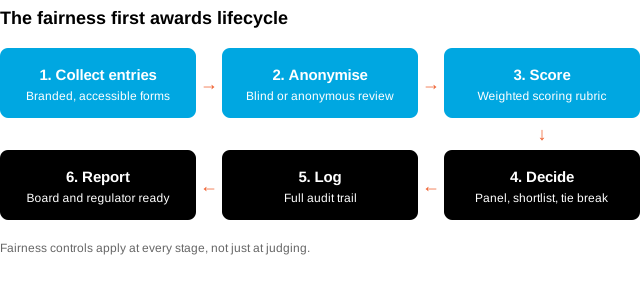
Fairness is difficult to prove. Without blind review, a scoring rubric and conflict of interest controls, a foundation cannot easily show that applications were assessed on merit. Dedicated software makes fairness a built in part of the process instead of a manual promise.
The scale of the sector explains why this now gets board attention. Grant making charities in England and Wales awarded £17.84 billion in 2024, up from £16.97 billion in 2023, and 32,661 charities reported grant making activity, of which 20,672 said it was their main activity (Charity Commission for England and Wales, news release, 3 June 2026). Looking only at trusts and foundations, 13,438 grantmakers distributed £8.4 billion in 2024 to 2025 (UKGrantmaking, analysis by 360Giving).
Those are sector totals, not a benchmark for any one foundation. The useful signal for a buyer is narrower: how many distinct funds you run, how many applications arrive per round, how many people assess them, and how long you must be able to explain a decision after it was made.
What the current regulatory guidance expects
Software does not make a foundation compliant. It does determine how much effort compliance costs, so it is worth knowing what your regulator asks for before you write a requirements list.
England and Wales. On 3 June 2026 the Charity Commission published Making grants to charities and other organisations, which replaced and widened its earlier grant making guidance. It sets out five stages: deciding funding priorities, due diligence on applicants, written grant terms, monitoring, and reporting. Several points translate directly into software requirements. Due diligence should be proportionate to risk, so intake needs to branch by applicant type. Grant terms should be set out in writing and cover use of funds, delivery period, monitoring and consequences of breach. Monitoring should match the size and risk of the grant. Where decisions are delegated to staff or a sub committee, the guidance expects written terms of reference and clear reporting, and trustees remain responsible. Trustees must identify and manage conflicts of interest, and when funding non charities they must keep a record of the decisions they make.
Ireland. Irish charities are accountable to the Charities Regulator, which publishes the Charities Governance Code as the minimum standard for managing and controlling a charity. Irish requirements are separate from the Charity Commission guidance above, and the two should not be read across to one another. If you operate in both jurisdictions, confirm each set of obligations with its own regulator.
Alongside regulation, open grants data is now a common expectation among UK funders. The 360Giving Data Standard gives a shared format for publishing grants data, with a quality dashboard and publishing support. If you intend to publish, check that a shortlisted system can export the fields the Standard needs without a manual rebuild each year.
Nine criteria for choosing foundation software
Rank these against your own portfolio. A single annual fund with thirty applications and three assessors has a very different shortlist from a corporate impact team running employee giving, community grants and a rapid response fund across three countries. Fairness and audit readiness come first for most foundations, because they are the areas where a weak tool creates real governance risk.
Swipe left or right to see the full table on mobile.
| Criterion | What to look for | Question to ask the supplier |
|---|---|---|
| Fairness and bias controls | Blind review, weighted scoring, conflict of interest controls, side by side comparison | Can we hide applicant identities and enforce one scoring rubric across every application? |
| Audit readiness and defensibility | Complete audit trail, role based permissions and separation of duties, data retention controls | Can we export a record of who scored what, when, and on what evidence? |
| Data protection and hosting | GDPR aligned processing, encryption in transit and at rest, independent certifications | Where is our data hosted and do we retain full ownership of it? |
| Multi fund configurability | No code builder, conditional logic, multi phase workflows, automated communications | Can our team add a second fund with different rules without developer help? |
| Intake and eligibility screening | Branching forms by applicant type, document upload guidance, screening before review | Can ineligible applications be filtered out before they reach an assessor? |
| Reviewer and applicant experience | Remote assessment, restricted reviewer access, mobile forms with autosave, multilingual options | Can assessors work from any device and see only their assigned applications? |
| Payments, claims and drawdowns | Payment schedules, claims with supporting documents, award and balance tracking | Can we pay in instalments against milestones and trace every claim? |
| Post award monitoring and reporting | Report requests and reminders, live dashboards, exports by programme, round or theme | Can we produce board and regulator reporting without manual rework? |
| Total cost and time to launch | Published or transparent pricing, implementation scope, cost of later changes | What is the three year cost, in writing, including changes we are likely to request? |
Fairness and bias controls are the spine of a defensible process
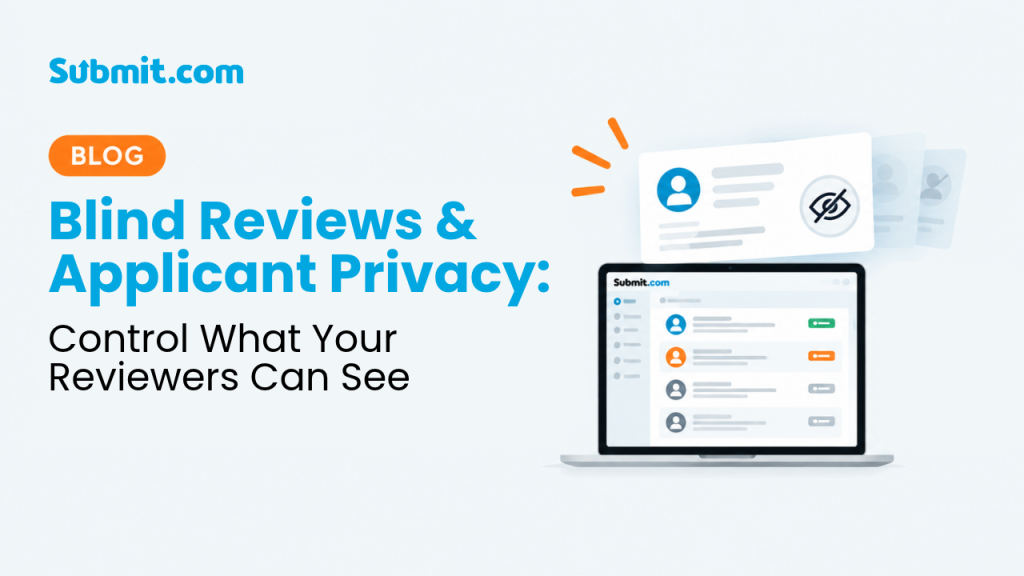
Look for blind or anonymous review that hides personal identifiers, a weighted scoring rubric applied consistently to every application, side by side comparison so assessors judge like with like, conflict of interest controls, private reviewer notes and tie break logic. These controls should be configured once and enforced by the system, not policed by hand. This matters most where your assessor pool overlaps with your applicant pool, which in a place based or sector specific fund it usually does.
The audit trail is the report
Trustees, funders and auditors want to see how and why a decision was made. If the platform records every action across submissions, scores, comments and administrative changes, evidencing your process becomes an export rather than a reconstruction. This is the criterion teams most often under weight at purchase and most regret two years later, when someone asks about a decision nobody present can remember.
Configurability is the criterion that ages best
Foundations rarely buy software for the programme they run today. They buy it for the emergency fund that arrives in eighteen months. A platform that needs supplier development work to add a fund, change a scoring rubric or insert an approval step will quietly set the pace of your programme design. Ask specifically who can make each kind of change: your team, the supplier, or neither without a contract variation.
The applicant experience is part of your governance
A confusing form produces incomplete applications, which produce staff chasing, which produce inconsistent evidence at the point of assessment. Accessible forms, progress saving, clear status visibility and document upload guidance reduce that load before it reaches your team. They also widen the pool of organisations that can realistically apply to you, which is a fairness question as much as an efficiency one. Where your community needs it, check for multilingual forms, including Irish (Gaeilge) and Welsh.
How to run a shortlist and a demo that tells you something
Generic demos show a product at its best. Scenario based demos show whether it fits your programme. Send every shortlisted supplier the same scenario in advance and ask them to build it live.
- Take one real fund. Supply the eligibility rules, the stages, the scoring rubric and the reporting obligations.
- Ask them to configure it in front of you, not to show a prepared example. Note what they cannot change without going away.
- Ask them to add a second, different fund in the same session. This is where template bound systems show themselves.
- Ask them to produce the audit view for a decided application and the board report for the round.
- Ask for three year costs in writing, including the cost of changes you are likely to request.
- Ask for a reference from a funder of comparable size and complexity, and speak to the person who administers the programme rather than the person who signed the contract.
Involve finance and your data protection lead early. In most foundations the budget sits with operations or a programme and needs trustee sign off, so a late objection from either costs a full cycle.
How foundations run grants and awards on Submit.com
Submit.com is a grant, awards and scholarship submission platform based in Cork, Ireland, used by foundations, councils, universities and charities across the UK and Ireland. The fairness and audit controls above are built into the workflow, and the same platform runs awards and grant programmes together, which suits the many foundations that both give grants and recognise work through awards. You can see the wider picture on the grant management for foundations and corporate impact teams page.
- Smart forms with branch logic and eligibility screening, so each fund carries its own rules and applicants only see relevant questions.
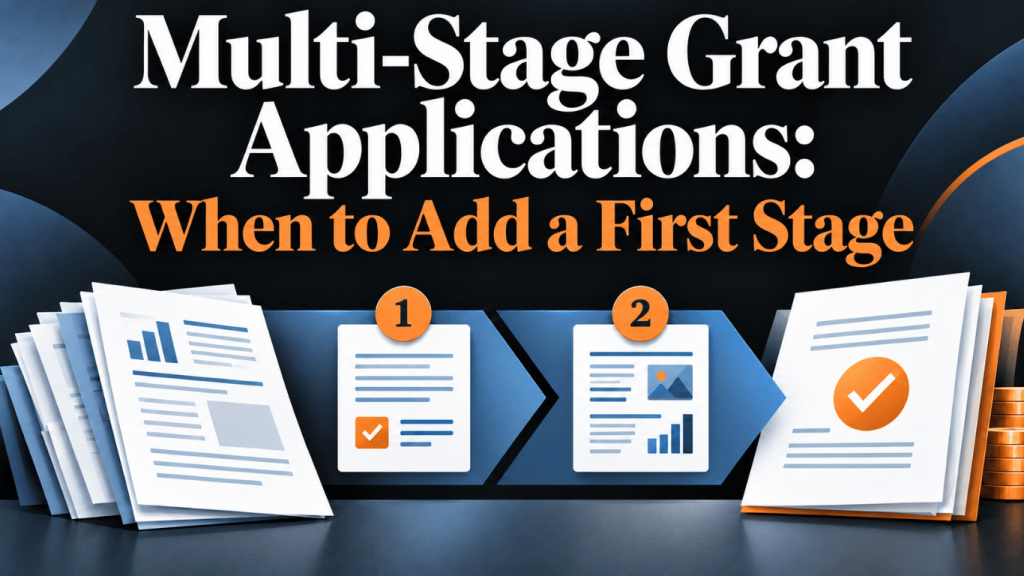
- Multi phase workflows covering expression of interest, full application, due diligence, award, payment and reporting stages.
- Weighted scoring, external reviewer accounts with limited access, and optional anonymisation to reduce identifying detail at assessment.
- Role based permissions and separation of duties, with audit logs across submissions, reviews, decisions and administrative actions.
- Grant tracking with awarded amounts and drawdowns, claims with supporting documents, and payments through Stripe.
- Post award report collection, live dashboards and exports to CSV, Excel and PDF, plus API access for finance or CRM systems.
- GDPR ready processing with configurable retention, SOC 2 Type 1 and Type 2, Cyber Essentials, and G-Cloud listing. Full detail is on the security and compliance page.
A concrete example of fairness controls in practice is the Cork Lifelong Learning Awards run by Cork City Council. For the first fully digital delivery, the council set up 23 external judges as limited access reviewers who could see only their assigned category. Each application was scored against five configurable criteria, totals were calculated automatically, and overall results were restricted to internal staff to protect the integrity of the process.
Reviewer experience matters just as much. Chambers Ireland moved three awards programmes online and found that judges could evaluate entries from anywhere rather than working through printed folders, which improved participation among a volunteer panel. At the High Fives Foundation, applications are tagged by applicant type and funding area as they arrive, so the team can route and assess them against the fund’s criteria without reading every line first.
Pricing tiers are published on the pricing page, which is worth comparing against suppliers who quote only on request. For the full lifecycle view, see grant management software and the awards management platform pages.
Frequently asked questions
What is the best foundation software for grants and awards?
There is no single best product for every funder. The right choice depends on how many distinct funds you run, how many applications arrive per round, who assesses them, and how long you must be able to evidence a decision. Rank the nine criteria in this guide against your own portfolio, then test shortlisted systems by asking each supplier to configure one of your real funds live in the demo.
Can one platform manage both awards and grants?
Yes. The underlying workflow of collecting applications, reviewing them against criteria, making decisions and reporting is shared across awards, grants, scholarships and nominations. A configurable platform lets a foundation run recognition awards and grant programmes side by side, each with its own forms, scoring and permissions, without a separate system for each. Check that payment scheduling and post award reporting are included rather than sold as an add on, because that is where grants diverge from a one off prize.
How do you make sure grant and awards judging is fair?
Fair judging rests on a few controls working together: a clear scoring rubric applied to every application, blind or anonymous review that hides personal identifiers, conflict of interest controls that keep assessors away from applications they cannot assess, and a complete audit trail of who scored what and why. Software such as Submit.com builds these controls into the workflow rather than leaving them to manual effort.
What does foundation software need to do for charity compliance?
Software supports compliance but does not deliver it. In England and Wales, the Charity Commission guidance published on 3 June 2026 expects proportionate due diligence, written grant terms, monitoring matched to the size and risk of the grant, managed conflicts of interest, and records of decisions when funding non charities. In practice that means a system should record who decided what and on what evidence, hold written terms against the award, and support report collection after payment. Irish charities should confirm their obligations with the Charities Regulator, which publishes the Charities Governance Code.
Is foundation grant software GDPR compliant?
It depends on the platform. Look for GDPR aligned data processing, encryption in transit and at rest, role based access, configurable data retention and independent security certifications such as SOC 2 and Cyber Essentials. Submit.com is GDPR ready, SOC 2 Type 1 and Type 2 certified, Cyber Essentials certified and listed on the UK Government’s G-Cloud Marketplace.
How long does it take to move off spreadsheets?
It depends on the complexity of your forms, approvals and reporting rather than on the software alone. A single fund with clear eligibility rules and one review stage is a much shorter project than a portfolio with staged payments and multi year reporting. Ask any supplier to quote implementation time against one of your real programmes, and ask a reference customer of similar size how long their first round actually took.
See it against your own fund.
Bring one real programme to a 15 minute call and we will configure it live rather than show a prepared example.


0 Comments