

Scholarship management software is a single system for collecting scholarship applications, screening eligibility, running reviewer scoring, recording award decisions and reporting on funds. The right platform depends on how many programs you run, how your review committee works, and whether you need donor and fund reporting alongside the application process.
Most scholarship teams do not start with software. They start with a form, a shared inbox and a spreadsheet, and that combination works until the second program is added, or the committee grows past four people, or a finance office asks which fund paid for which award. The question is rarely whether to replace the spreadsheet. It is which system replaces it, and what you will be able to prove about your process afterward.
This guide covers what the category actually does, what to compare, what each platform publishes about itself, and where the available information runs out.
What does scholarship management software actually do?
Scholarship management software handles five stages: application intake, eligibility screening, review and scoring, award decision, and reporting. Platforms differ mostly in how much of the last two they cover. Intake and scoring are table stakes across the category. Fund tracking, renewal management and donor reporting are where products diverge sharply.
That distinction matters more than feature counts. A platform built for a community foundation distributing 40 named awards is solving a different problem from one built for a university processing 6,000 applications against 12 funds.
Scholarship management platforms compared
Swipe left or right to see the full table on mobile.
| Platform | Positioned for | Price published by vendor |
|---|---|---|
| Submit.com | Organizations running several program types in one platform, including scholarships, grants and awards | Yes, published at submit.com/pricing |
| SmarterSelect | Nonprofits, community foundations and schools | Tiers listed by applicant volume; third-party listings disagree on figures |
| AwardSpring | Educational institutions managing application volume and fund utilization | Not confirmed from a primary source |
| Kaleidoscope | Sponsors seeking a managed-service model | Not confirmed from a primary source |
| Submittable | High-volume application and submission programs | Not confirmed from a primary source |
Positioning reflects how each vendor describes its own target market. Pricing transparency was checked against vendor pricing pages and third-party software directories in October 2026. Confirm current pricing directly with any vendor before shortlisting.
Top scholarship management platforms
Submit.com
Submit.com is built for organizations that run complex, high-volume scholarship programs alongside other application types. It supports multi-phase submissions, weighted scoring, and folders for organizing applicant data. Role-based permissions, a tagging system that can trigger automated emails and folder routing, and configurable workflows make it a fit for government agencies, universities and private funders.
- Multiple program types in one platform without a separate build for each
- Weighted scoring with blind and committee review options
- Role-based permissions, separation of duties and full audit trails
- Configurable forms and review workflows without developer support
Submit.com is SOC 2 Type 1 and Type 2 certified, GDPR compliant and Cyber Essentials certified, and publishes its pricing rather than routing every enquiry through sales.
SmarterSelect
SmarterSelect positions itself for nonprofits, community foundations and schools, with pre-built program templates, dynamic form fields, reviewer organization and scoring, and reporting. Its pricing is structured in annual tiers by applicant volume.
Worth knowing before you shortlist: published figures for those tiers vary considerably between third-party software directories, and at least one listing states that exact prices are not published on the vendor’s own pricing page. Treat any number you find in a directory as indicative and confirm it directly.
Kaleidoscope
Kaleidoscope connects sponsors and applicants through a network model and emphasizes sponsor brand visibility. It suits scholarship providers who want a managed-service approach rather than configuring a platform themselves. That is a genuine trade-off: less configuration work for you, less control over how the process runs.
Submittable
Submittable is used for large-scale application programs and is known for form building, integrations and applicant tracking. It is a general submission platform rather than a scholarship-specific one, which cuts both ways depending on whether you need scholarship-specific fund and renewal handling.
- Broad file type support
- Integrated payment and award tracking
- Built-in applicant communication
- Mobile-ready applicant portal
Key features and tools to look for
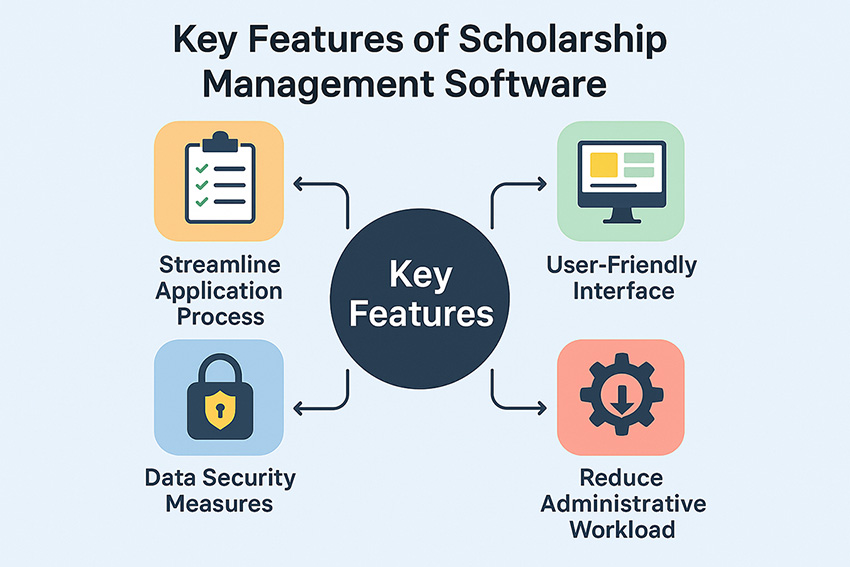
Application intake and eligibility screening
Conditional logic, autosave and mobile-ready forms reduce drop-off. Eligibility screening at the point of application means reviewers spend their time on applications that qualify. Many platforms also synchronize with a Student Information System (SIS) so applicant data stays current and is not rekeyed.
Data security and compliance
Expect encryption in transit and at rest, role-based access control, regular backups, immutable audit trails, and controls that support your obligations under FERPA and, where applicable, GDPR. Ask for the vendor’s own certifications rather than a general compliance statement.
Review workflow and defensibility
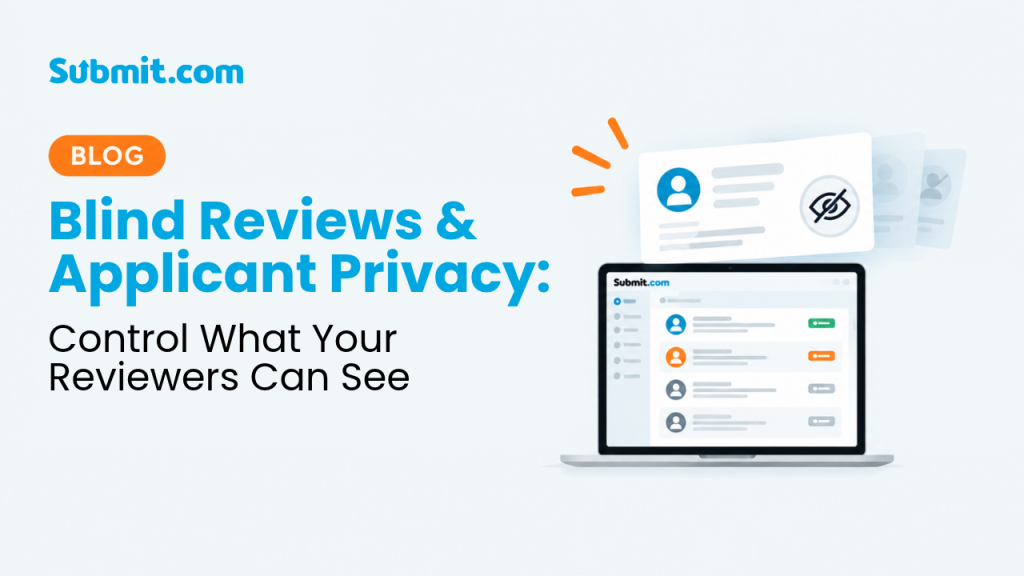
Weighted scoring, blind or anonymized review, recorded conflict-of-interest declarations and a complete audit trail. The practical test: if an unsuccessful applicant challenges a decision, can you export that applicant’s full scoring history in minutes?
Reporting and fund visibility
Centralized dashboards, automated workflows and real-time reporting give visibility at every stage. For scholarship programs specifically, check that awards link back to the correct fund without manual reconciliation, and that renewable awards are tracked across years rather than re-entered each cycle.
What scholarship management software improves
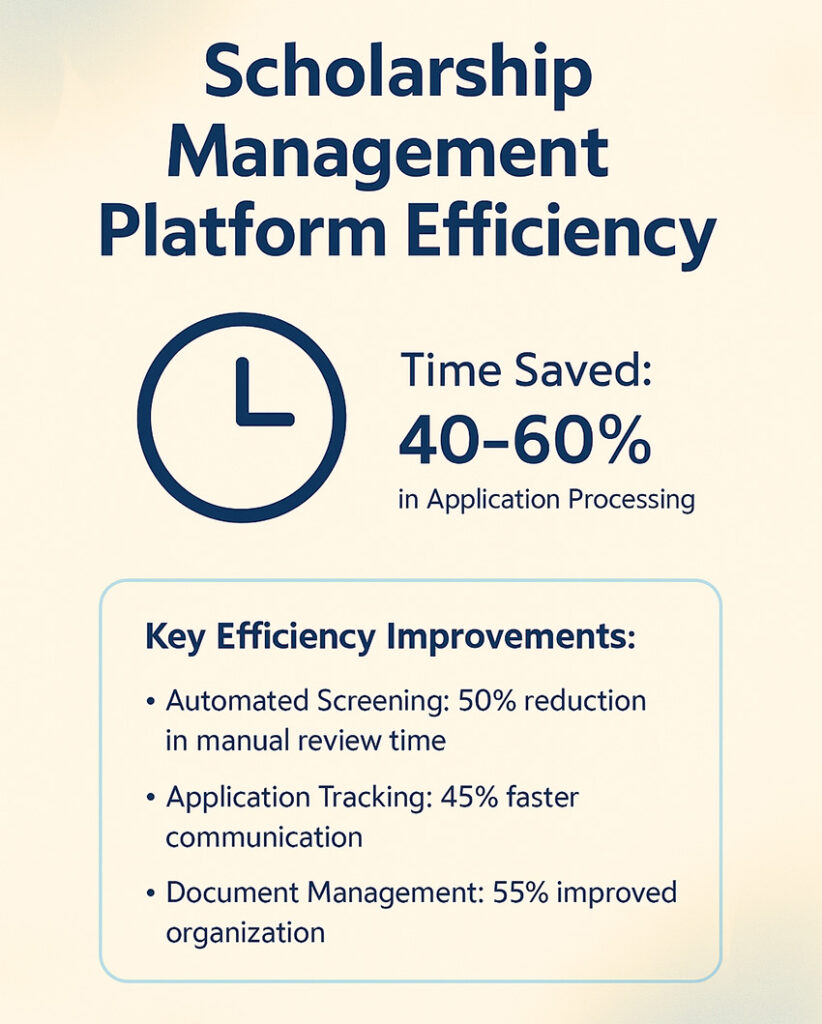
Administrative workload drops because intake, screening, reminders and decision correspondence stop being manual tasks. Reviewer coordination improves because scoring happens in one place against one rubric instead of across returned email attachments.
Applicant communication becomes consistent. Status updates, deadline reminders and decision notices go out automatically and are recorded against the application, which matters when someone asks what an applicant was told and when.
Donor and stakeholder reporting gets easier where the platform links awards to funds. Fund utilization summaries that previously took a week of reconciliation come out of live data instead.
When scholarship management software is the wrong choice
If you run one scholarship a year, receive under 50 applications, and two people make the decision, a well-built form and a shared folder will serve you fine. Software adds configuration work and an annual cost that a program at that scale will not recover.
Submit.com specifically is a poor fit if you need a packaged financial aid assessment product, if your requirement is donor CRM and stewardship rather than application management, or if your scholarship process is already fully built inside an enterprise system your institution has committed to. In those cases a scholarship-specific or SIS-native product will fit better than a configurable submission platform.
How to choose the right solution

Start with your hardest program, not your simplest
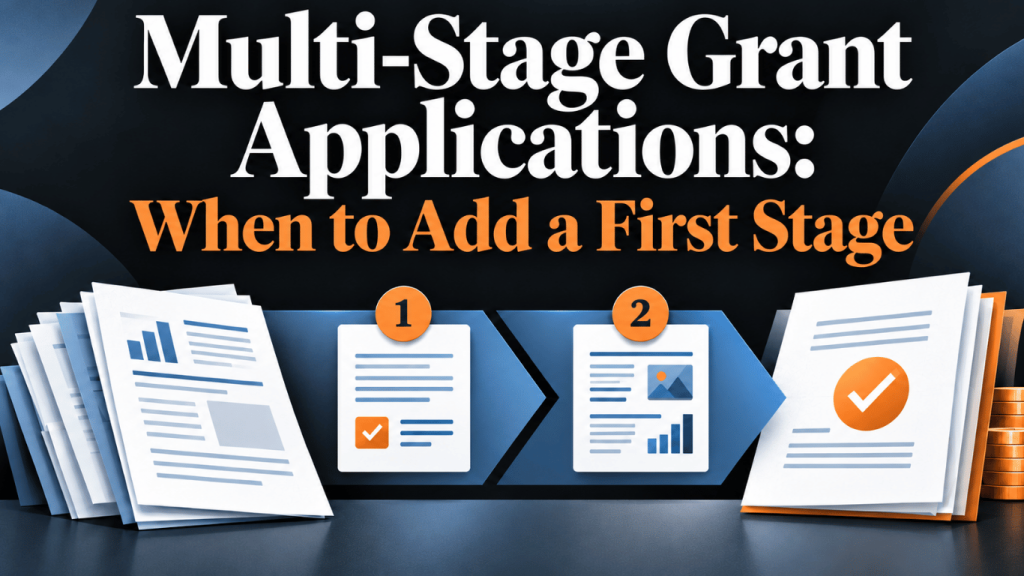
Evaluate against the scholarship with the awkward eligibility rule, the two-stage panel, or the renewal condition nobody enjoys tracking. A demo built around your easiest program tells you nothing. Bring the difficult one and ask the vendor to configure it live.
Compare total cost, not headline price
Ask what is included at each tier and what is charged separately: implementation, training, additional programs, additional reviewers, SSO, support beyond standard hours. A low entry price with per-program fees can overtake a flat annual price quickly once you add the third program.
Test support before you sign, not after
Onboarding, live or ticketed support and a usable knowledge base determine whether adoption sticks. Send a real question during the evaluation and time the response. That single data point tells you more than any support page.
Involve the people who will actually use it
Reviewers abandon systems they find awkward, and committee members are often the least software-tolerant group in the process. If reviewers cannot score an application without training, your scoring data will be late every cycle.
Frequently asked questions
How much does scholarship management software cost?
Most vendors in this category do not publish prices, so meaningful comparison usually requires contacting each one. Pricing models vary: some charge an annual fee by applicant volume, some per program, and some per user. Submit.com publishes a flat annual price of 5,995 euro per year, which covers unlimited programs. Where third-party software directories list figures for other vendors, those figures frequently disagree with each other, so confirm any number directly with the vendor before budgeting.
What is scholarship management software?
Scholarship management software is a single system for collecting scholarship applications, screening eligibility, running reviewer scoring, recording award decisions and reporting on funds. It replaces the mix of forms, shared inboxes and spreadsheets most programs start with.
What security measures should institutions expect?
Expect encryption in transit and at rest, role-based access control, regular backups, immutable audit logs, and controls that support your obligations under FERPA and, where applicable, GDPR. Ask for the vendor’s own certifications and a completed security questionnaire rather than accepting a general compliance statement.
Can one platform handle several scholarships with different rules?
Yes, on most platforms, but check how it is priced and how it is configured. Some products charge per program, which changes the economics once you pass three or four. Others support multiple programs within one annual fee, each with its own eligibility rules, questions, reviewers and deadlines.
When is scholarship management software not worth it?
If you run one scholarship a year, receive under 50 applications, and two people make the decision, a well-built form and a shared folder will serve you fine. Software adds configuration work and an annual cost that a program at that scale will not recover.
See it run your hardest scholarship
Bring the program with the complicated eligibility rule and the committee that never agrees. We will configure it during the demo rather than showing you a sample.


0 Comments