
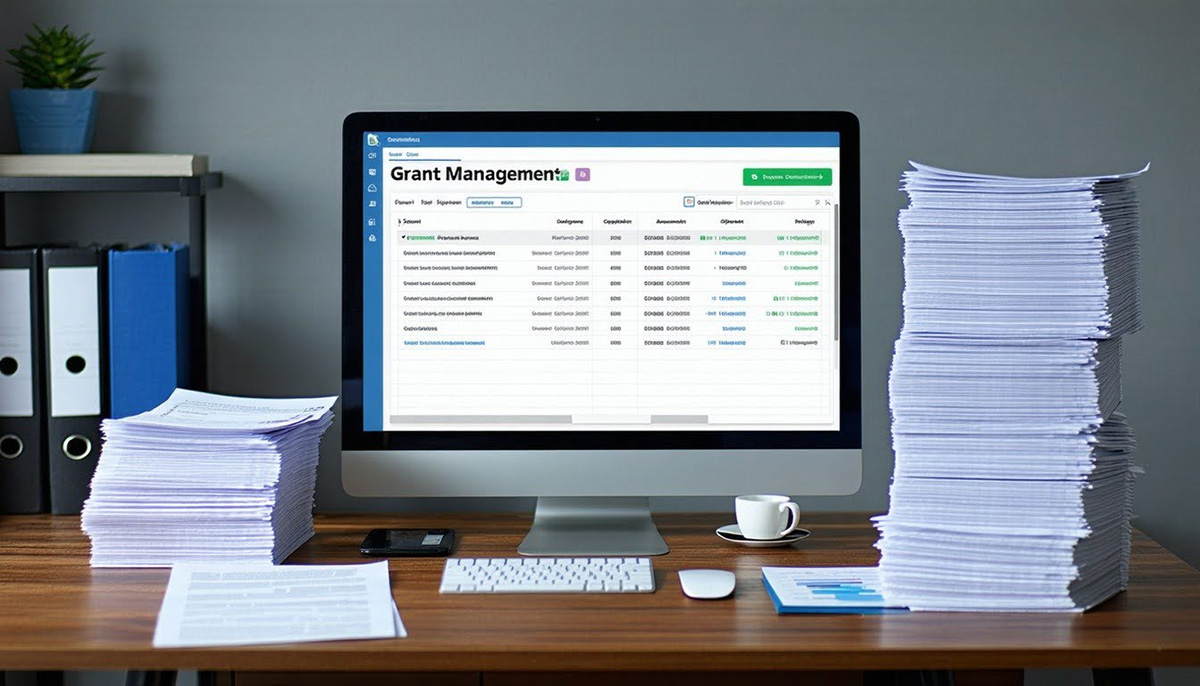
To manage a grant well, read the grant agreement before you spend anything, track spending against that grant separately from your other money, deliver what you promised and agree any changes with the funder before you make them, report on time with evidence you collected as you went, and close the grant properly at the end. Most grant problems come from skipping the first step or leaving evidence until the final report.
This guide is for organisations that have received a grant: charities, community groups, schools, researchers and businesses. If you run a funding programme and award grants yourself, see our practical guide to running a grant programme instead.
1. Read the grant agreement and turn it into a checklist
The grant agreement, or letter of offer, is the rulebook for your grant. Read it in full before accepting it and before spending any of the money, because some funders will not cover costs incurred before the agreement is signed. Then pull the key points into a one-page checklist that everyone working on the project can see.
| Item | What to record |
|---|---|
| Purpose | Exactly what the grant is for, in the funder’s words |
| Eligible costs | What you can and cannot spend the money on, and any limits on categories such as staff or equipment |
| Grant period | Start and end dates, and the date by which money must be spent |
| Payments | Whether you are paid up front, in instalments or against claims, and what evidence each claim needs |
| Reporting | Every report due, its date and what it must contain |
| Changes | How to request a change to budget, timing or activities, and who approves it |
| Acknowledgement | How the funder must be credited in publicity and materials |
| Records | What you must keep, for how long, and whether the funder can inspect it |
| Unspent money | What happens to funds not spent by the end date |
On a small screen, scroll the table sideways to see both columns.
Public money usually comes with set rules. In Ireland, grants from Exchequer funds are governed by Department of Public Expenditure and Reform Circular 13/2014, which sets out responsibilities for grant recipients as well as funders, including principles of clarity, fairness, governance and value for money (gov.ie, Circular 13/2014). In the UK, central government grants follow the Government Functional Standard GovS 015, under which government grant agreements must include terms of eligible expenditure (GOV.UK, GovS 015). If you are unsure what a condition means, ask the funder before you spend, not after.
2. Set up the budget and track spending separately
Give each grant its own budget, broken down into the same categories the funder approved, and its own code in your accounts so every payment is tagged to it. That way you can always see how much has been spent against each line and how much is left, without untangling it from your other income.
Keep receipts, invoices, timesheets and payment records as you go, filed against the budget line they relate to. If staff time is charged to the grant, record it at the time rather than estimating it later. For charities, money given for a specific purpose is usually treated as a restricted fund in the accounts, which is another reason to keep it separate.
3. Deliver the project and check in monthly
Turn the activities and outcomes you promised into a simple plan with milestones and an owner for each. Once a month, compare progress and spending against the plan: are you on track, under-spending or over-spending, and are any milestones slipping?
If something needs to change, such as moving money between budget lines, extending the timetable or adjusting an activity, contact the funder first and get the change agreed in writing. Funders generally respond better to an early conversation than to a surprise in the final report.
4. Report on time, using evidence you have already collected
Put every reporting deadline in a shared calendar with reminders a few weeks ahead. Decide at the start what evidence each report needs, such as participant numbers, photographs, feedback or outcome measures, and collect it as the project runs. A report written from records gathered along the way takes hours; one reconstructed from memory takes days and is less convincing.
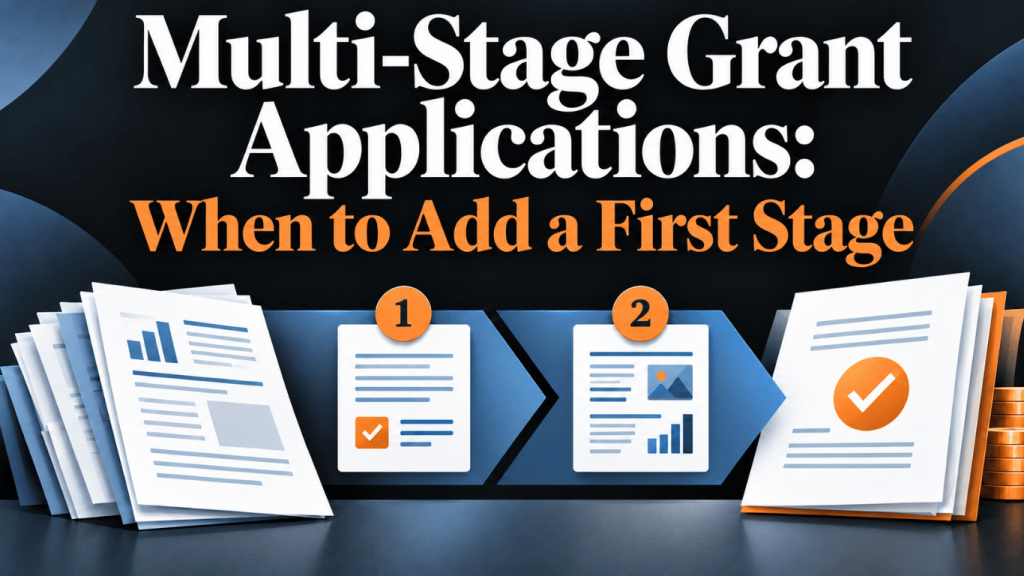
Follow the funder’s format exactly and answer the questions they ask. Many funders now collect reports online: if your funder uses a portal such as Submit.com, your progress and final reports may be added as later stages of your original application, so the funder sees your update alongside what you first proposed.
5. Close the grant properly
At the end of the grant period, submit the final report and financial statement, reconcile spending against the approved budget, and deal with any unspent money as the agreement requires. Keep all records for as long as the agreement says, since funders and auditors may ask for them after the grant ends.
Then take an hour to note what worked, what you would do differently, and what results you can use in your next application. A tidy archive of past applications, reports and outcomes makes the next one faster to write.
Common grant management mistakes
- Spending before the agreement is signed, on costs the funder then will not cover.
- Charging ineligible costs, because nobody checked the agreement’s list.
- Mixing grant money with general funds, so spending cannot be shown line by line.
- Changing the project without asking, then explaining it in the final report.
- Collecting evidence at the end, when the numbers and photographs are hardest to find.
- Missing a reporting deadline, which can delay the next payment.
Managing several grants at once
Once you hold more than a couple of grants, keep one register listing every grant with its funder, amount, dates, budget, reporting deadlines and the person responsible. Review it monthly. One named owner per grant prevents the common situation where everyone assumes someone else is writing the report.
On the other side: how funders manage grants
Funders face the same tasks at a larger scale: publishing calls, assessing applications, recording decisions, paying grants and chasing reports across many recipients. Many use grant management software to keep each application, score, decision and report in one place. Submit.com grant management software is used by councils, foundations, charities and universities in Ireland and the UK to run their grant programmes. For an overview of both sides, see what grant management is.
Frequently asked questions
What is the first thing to do after receiving a grant?
Read the grant agreement in full before accepting it or spending any money, and turn its key conditions into a one-page checklist: purpose, eligible costs, dates, payments, reports, how to request changes and what records to keep.
Can I spend grant money on something not in the budget?
Only with the funder’s agreement. If you need to move money between budget lines or change an activity, ask the funder first and get the change confirmed in writing before you spend.
What happens if I do not spend all the grant?
It depends on the grant agreement. Some funders ask for unspent money to be returned, others allow it to be carried forward or used for related work. Check the agreement and talk to the funder before the grant period ends.
How long should I keep grant records?
For as long as the grant agreement requires, which is often several years after the grant ends. Keep receipts, payment records, reports and correspondence together so they can be produced if the funder or an auditor asks.
Run a grant programme yourself? See how Submit.com keeps applications, decisions, payments and grantee reports in one place.





0 Comments