
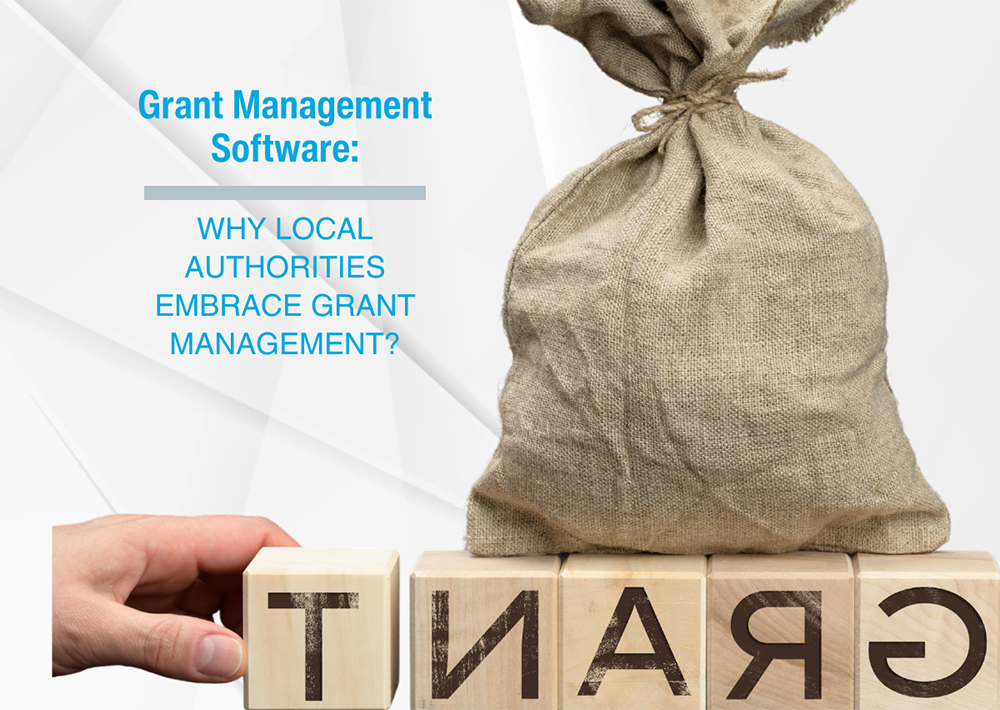
Councils are moving grant management online because the old way no longer copes with the pressure on it: more schemes run by the same small teams, decisions that must stand up to auditors, councillors and freedom of information requests, national targets to put services online, and applicants who expect to apply from their phone. In Ireland, the local government digital strategy aims for 90% of council services to be available online by 2030. For a council still running grants on spreadsheets and email, the usual trigger to move is a new scheme, an audit finding or losing the one person who knows how the process works.
This guide sets out the pressures behind the shift, what changes when grants move online, what councils in Ireland and the UK have achieved, and what to check before your council makes the move. It is written by Submit.com, which sells grant management software to councils in both countries.
Why are councils moving grant management online?
1. More schemes, the same teams
Councils run community, arts, sports, heritage, housing and climate grants alongside schemes they deliver for central government, and new schemes often arrive with tight deadlines and no extra staff. Running each one through its own spreadsheet and inbox multiplies the admin. A single system lets a team reuse forms, scoring and reporting across schemes instead of rebuilding them every round.
2. Decisions have to stand up to scrutiny
Public money brings questions from auditors, elected members, unsuccessful applicants and freedom of information requests. Answering “how was this decided?” from email threads and spreadsheet versions is slow and unreliable. An online system records who scored each application, against which criteria, who approved it and when.
3. National digital targets
In Ireland, the Local Government Digital and ICT Strategy 2030 aims for every local authority to have 90% of its services available online by 2030, structured around four themes: digital services, digital communities, digital workforce and digital systems (Local Government Management Agency). Grant schemes are among the most common services councils still run on paper or email.
4. Applicants expect to apply online, and must be able to
Community groups, businesses and residents expect to apply, save their progress and check their status online. In the UK, councils are public sector bodies under the Public Sector Bodies (Websites and Mobile Applications) (No. 2) Accessibility Regulations 2018, which require their websites and mobile applications to be perceivable, operable, understandable and robust (legislation.gov.uk). Online application forms are part of that service, so accessibility belongs on the requirements list from the start. Irish councils also have statutory Irish language obligations, and Welsh councils have Welsh language duties.
5. Councils no longer have to start from scratch
Irish public sector ICT has long followed a “build to share” principle: a solution built by one authority should be available to the others. On Submit.com, Irish councils can draw on a shared library of more than 100 schemes already built and run by other local authorities, from Vacant Property Refurbishment Grants to Community Climate Action Programmes, and configure them for their own area (Build to Share for Irish councils).
What changes when grants move online?
| Task | Spreadsheets and email | Online grant management system |
|---|---|---|
| Applications | Downloaded forms emailed or posted in; incomplete submissions common | Online forms that save progress, check eligibility and require the right documents |
| Assessment | Packs emailed to reviewers; scores collected in different formats | Reviewers log in to see only their assigned applications and score against the same criteria |
| Decisions | Recorded in minutes, emails and spreadsheet versions | Each decision, its reasons and who approved it recorded on the application |
| Payments and reporting | Tracked in separate finance spreadsheets; reports chased by email | Awarded amounts, drawdowns and grantee reports tracked against each grant |
| Questions from councillors or auditors | Answers rebuilt by hand from several files | Reports filtered by scheme, status, area or date |
On a small screen, scroll the table sideways to see every column.
What have councils in Ireland and the UK achieved?
The examples below come from Submit.com customers.
- Ireland: more than 28 of Ireland’s 31 local authorities use Submit.com.
- Cork City Council grew its online applications from around 1,000 in 2019 to 22,000 in 2020, and now runs more than 100 active forms, from arts and community grants to road licences.
- Dún Laoghaire-Rathdown County Council standardised community grant workflows across eight departments, with 22 admin users each limited to their own role, and tags applications by electoral ward so staff can produce a report for each councillor.
- The Dún Laoghaire-Rathdown Local Enterprise Office moved its evaluation committee from printed booklets to shared online folders, which its Head of Enterprise and Economics estimates saves two days a month.
- Kildare County Council publishes its application forms in Irish and English, and applicants can switch language mid-form without losing their answers.
- United Kingdom: councils using Submit.com include Suffolk County Council, Mid Ulster District Council, Pembrokeshire County Council and Mid and East Antrim Borough Council (Submit.com for UK local authorities). In Northern Ireland, Developing Healthy Communities replaced a failing legacy system and opened a new community grant fund eight weeks after choosing Submit.com.
“We’ve got a slick, efficient grant process now. Happier team, way less paperwork. Going digital was not just a tech upgrade, it was a mindset shift, and it’s really made all the difference.”
Beverley Davies, Grants and Programmes Manager, Suffolk County Council
“I would highly recommend Submit to anyone who needs a submission management system. As we transform our application workflows in DLR, we are still finding new uses for it.”
Ronan Herron, Digital Strategy Officer, Dún Laoghaire-Rathdown County Council
What should a council check before moving grants online?
- Procurement route. UK councils can buy cloud software through G-Cloud 15 without running their own full tender; check each supplier is listed on G-Cloud 15. Irish councils generally procure through eTenders and the Office of Government Procurement.
- Security and data protection. Ask for the supplier’s SOC 2 report and Cyber Essentials certificate, confirm where data is hosted, and agree a data processing agreement before any applicant data goes in.
- Accessibility and language. Ask how forms meet accessibility requirements, and whether Irish or Welsh versions are built from the same form or maintained separately.
- Who configures it. Ask the supplier to build a second scheme in front of you. If every new scheme needs developer time, the system will not keep pace with your funding calendar.
- Where to start. Pick one scheme that is due soon and typical of your others, test it end to end with staff as applicants and reviewers, then copy what works. Cork City Council started with a single pilot before rolling out across departments.
For a comparison of the platforms councils most often evaluate, see grant management software for UK and Irish councils. For running each stage of a programme well, see our grant management guide.
Frequently asked questions
Why are local authorities moving grant management online?
Because spreadsheets and email no longer cope with the pressure: more schemes run by the same teams, decisions that must stand up to auditors, councillors and freedom of information requests, national digital targets, and applicants who expect to apply online. In Ireland, the Local Government Digital and ICT Strategy 2030 aims for 90% of council services to be available online by 2030.
What are the risks of not moving grants online?
Slower processing, inconsistent scoring between reviewers, applications and documents spread across inboxes, and difficulty showing how a decision was reached when an auditor, councillor or applicant asks. The risk grows when the person who knows the process leaves.
How long does it take a council to move a grant scheme online?
It depends on the scheme and whether it replaces an existing system. A straightforward scheme can often be launched within days on a configurable platform. Developing Healthy Communities replaced a legacy system and opened a new fund eight weeks after choosing Submit.com.
How can councils keep grant data secure online?
Choose a supplier that can show a current SOC 2 report and Cyber Essentials certification, confirm where data is hosted, agree a data processing agreement, use role-based permissions so staff and reviewers only see what they need, and set retention periods for applicant data.
See how Submit.com would run one of your council’s grant schemes, from application form to final report.



0 Comments